SOC 2 penetration testing: what is required and how to do it right
Penetration testing is one of the most misunderstood SOC 2 requirements. Founders often think any paid security scan satisfies the auditor, then get hit with a finding because the test was the wrong type, the wrong scope, or did not produce the right evidence. This guide walks through what SOC 2 actually demands, what a compliant pen test looks like, and how to budget for it.
What CC7.1 actually requires
CC7.1 sits inside the Trust Services Criteria for system operations. The control text says the entity uses detection and monitoring procedures to identify changes in configurations that result in the introduction of new vulnerabilities, and uses procedures to identify susceptibilities to newly discovered vulnerabilities.
In plain language, CC7.1 requires two distinct activities. First, ongoing vulnerability identification, which auditors expect to see backed by automated scanners running continuously across infrastructure and code. Second, periodic testing by skilled humans who actively try to break the system in ways scanners cannot. That second activity is the penetration test.
Auditors do not just want a passing report. They want evidence that you ran the test, reviewed the findings, and tracked remediations to closure. The remediation tracking is often where companies fail, because they file the report, fix the easy stuff, and forget the medium-severity items that the auditor will absolutely ask about.
Penetration test versus vulnerability scan
These get conflated constantly. They are not the same thing and a vulnerability scan alone does not satisfy CC7.1.
A vulnerability scan is automated. Tools like Nessus, Qualys, or open-source equivalents probe your systems against a database of known vulnerabilities and produce a report. Scans are cheap, run continuously, and catch known issues. They do not exploit anything. They do not chain weaknesses together. They flag potential issues, not confirmed ones.
A penetration test is manual, performed by a credentialed human tester who actively attempts to compromise your system. The tester chains low-severity findings into critical compromises, abuses business logic that scanners cannot understand, and produces a narrative report describing how a real attacker would breach you. Pen tests cost more and happen less often, but they find what scanners cannot.
You need both. Continuous scanning satisfies the ongoing detection portion of CC7.1. The annual or semi-annual pen test satisfies the periodic deep-testing portion.
How often to test
The minimum cadence for SOC 2 is annual. For a Type II audit covering a six- or twelve-month observation window, most experienced auditors prefer to see two tests per year, especially for companies serving regulated industries or handling sensitive customer data. If you only test once and a major release ships mid-window, the auditor may push you to test again before the report can be issued.
A practical rhythm for a growing startup is one full external and web application pen test every twelve months, with a delta test or scoped retest after any major architectural change or new product launch.
Scope decisions
Scope drives both cost and audit coverage. A typical SOC 2 pen test should cover the external perimeter, including all public-facing services and any management interfaces exposed to the internet. The internal network gets tested if you have a corporate network or production environment that an attacker could pivot into after initial compromise. The web application is almost always in scope for SaaS companies, including authentication flows, authorization logic, and any API endpoints customers consume.
If you ship a mobile app, that is a separate engagement. If you have a Kubernetes or container infrastructure that exposes admin surfaces, scope it explicitly. Auditors look at the report and check whether the scope reasonably covers your production system. A pen test that only touches a marketing website while your real product runs on a different domain will not pass review.
What a compliant pen test report includes
The report needs an executive summary suitable for sharing with auditors, customers, and your board. It needs a methodology section that describes what was tested, what was excluded, and what techniques were used. Each finding needs a severity rating using a standard scale such as CVSS, a clear technical description, reproduction steps, business impact, and a recommended remediation.
Crucially, the report needs to identify the tester by name and credentials, list the dates of testing, and be signed or attested by the testing firm. An anonymous PDF from a scanner does not qualify. The auditor wants to see that a real, qualified human did the work.
After remediation, request a retest letter or attestation confirming the critical and high findings have been resolved. This pairing of original report plus retest letter is the gold standard evidence package for CC7.1.
Cost range
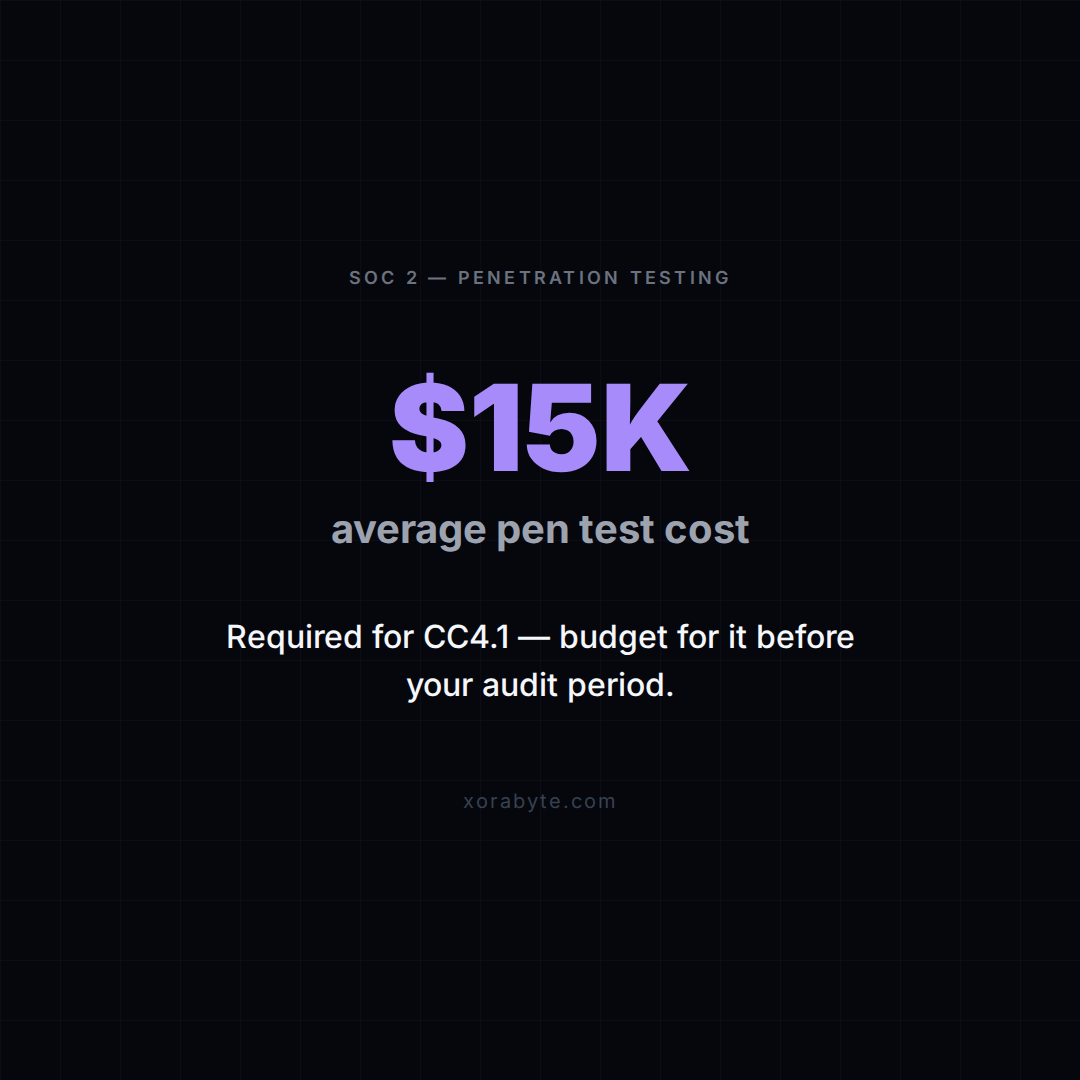
Expect to pay between five thousand and thirty thousand dollars for a single engagement. The low end covers a small external perimeter and a basic web app from a junior consultancy. The high end covers a multi-week test across external, internal, and complex application targets from a top-tier firm with senior testers. Most early-stage SaaS companies land between ten thousand and eighteen thousand dollars for their first SOC 2 pen test.
Cheaper providers exist but be cautious. A two thousand dollar pen test is almost certainly an automated scan with a fancy cover page, which the auditor will recognize and reject.
Choosing a tester
Look for OSCP, OSCE, GPEN, or CEH credentials on the testers actually performing the work, not just the firm's leadership. Ask for a sample report with names redacted so you can evaluate quality and depth before signing. Prefer firms that have worked with companies in your industry and at your stage. Ask whether your specific testers will be senior or junior, and whether you can interview them.
Avoid firms that cannot articulate a clear methodology, refuse to share sample reports, or quote a flat low price without scoping conversations.
Turning findings into evidence
Tip
Findings are not failures. Unremediated findings are failures. Set up a remediation tracking workflow where every finding becomes a ticket, gets an owner, gets a target close date, and gets verified after fix. Export this tracking history at audit time alongside the original report and retest letter.
A continuous monitoring approach turns the pen test from an annual fire drill into a routine input to a system that already knows your control posture.
Next steps
Read the full SOC 2 control requirements to see how CC7.1 fits alongside the other Trust Services Criteria, or book a call to have a fractional CISO track your pen test findings to closure as audit-ready evidence.
Want a security leader to run this?
Xorabyte is a fractional CISO for startups who can review your cloud for the gaps found first, so a blocked deal or an audit stops being your problem to carry alone. Book a call and you will leave with a clear path, not a sales pitch.